
"We still need to understand what these treatments mean for patients over the long term... The OMI Platform will enable this – first for vorasidenib and then for other emerging treatments.”
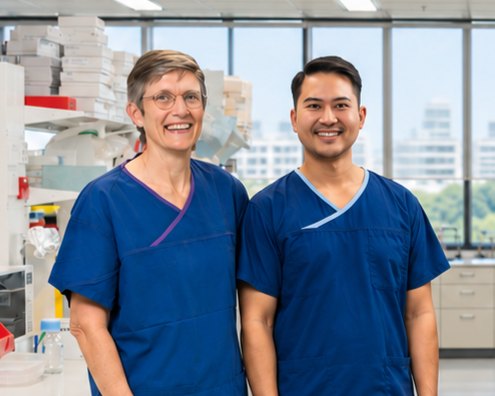
Professor Lindy Jeffree
Brain Cancer Australia has launched Opt Me In (OMI), a new national platform that makes it easier for people with brain cancer to take part in research.
Eligible patients can use Opt Me In to self-enrol and consent to studies online. By connecting participating patients with the Australian Brain Cancer Registry, researchers now have the infrastructure to run faster, more cost-effective, data-driven trials and studies.
The platform’s first study, Vorasidenib Outcomes: Real-world Analysis (VORA), will track the long-term impact of vorasidenib – the first new brain cancer drug in 20 years.
Vorasidenib is used to treat IDH-mutant glioma (including low-grade astrocytoma and oligodendroglioma), slow-growing but incurable brain tumours with a median prognosis of five to 13 years. Clinical trials have shown it can delay tumour progression and postpone the need for radiation and chemotherapy, but its longer-term impact, including on overall survival, isn’t yet known.
Brain Cancer Australia National Consortium Chair Professor Lindy Jeffree said vorasidenib is an important step forward.
“Until recently, treatment for IDH-mutant glioma followed protocols from the 1990s. Finally, we have a promising new treatment to offer brain cancer patients with this type of tumour,” said Professor Jeffree.
“But we still need to understand what these treatments mean for patients over the long term – how they affect quality of life, if there are unintended side effects and whether it helps patients live longer. The OMI Platform will enable this – first for vorasidenib and then for other emerging treatments.”
Brain Cancer Australia Founder and Director Robyn Leonard OAM said the launch was a major milestone.
“By launching Opt Me In and connecting it to the Australian Brain Cancer Registry we have – for the first time – the research infrastructure to track how treatments like vorasidenib are working in the real world – not just in clinical trials,” Robyn said.
“Now that it’s live, researchers can use this interconnected infrastructure to get the answers to many questions – and in less time and at less cost than with traditional clinical trials. This will provide evidence to improve care and speed up access to new treatments.”
Daniel Campbell, a Melbourne high school teacher and father of two, was diagnosed with grade 2 astrocytoma in 2022. He will take part in VORA, helping researchers understand the long-term impact of the treatment.
For Daniel, knowing research is under way helps ease the distress of living with brain cancer.
“To know that there is meaningful research going on is absolutely invaluable. Every small step forward provides immense respite from a deep feeling of vulnerability,” he said. Read Daniel’ story here
Phase 1 of the study is currently open to patients who received vorasidenib through the drug company Servier's early access program. Other participants will be included as the study progresses.
For more information about Opt Me In and the VORA study, please email info@braincanceraustralia.org.au or go to https://www.braincanceraustralia.org.au/our-work/omi-studies-trials