

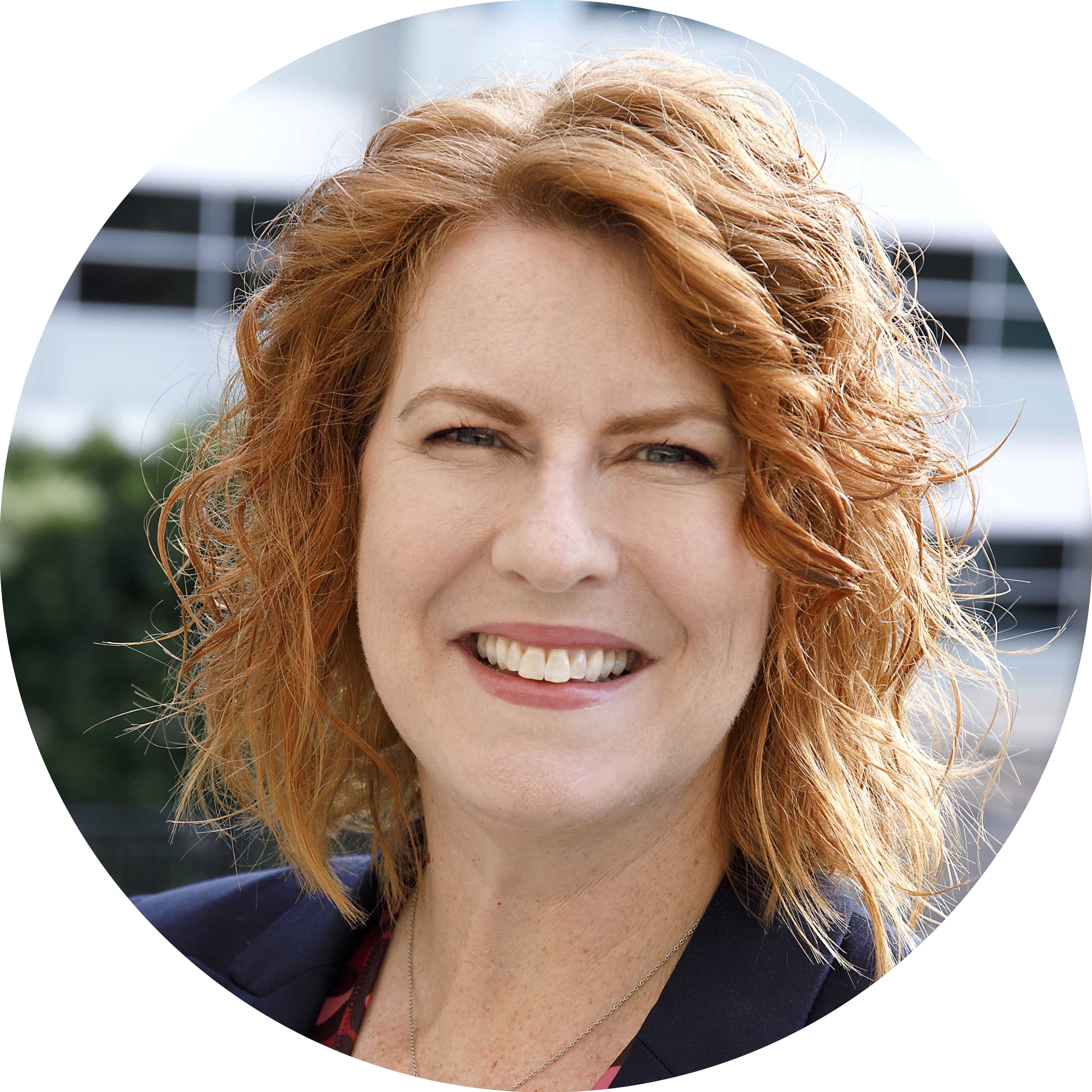
“Brain cancer work is emotionally demanding. But it’s also a field that’s still evolving. We haven’t learned all the lessons yet and we haven’t made all the gains — but we can still keep improving.”
Dr Cecelia Gzell
Radiation oncologist Dr Cecelia Gzell still remembers Lucie.
They met in 2007 when Lucie — the daughter of Brain Cancer Australia founder Robyn Leonard — was undergoing radiation treatment for her brain cancer.
“Lucie has always stood out in my memory,” Cecelia says. “We were a similar age and got along very well. I cared for her when she was first diagnosed, and again later towards the end of her battle. Years later, when I reconnected with Robyn through my work, it felt like one of those connections that keeps coming back.”
Patients like Lucie helped shape Cecelia’s decision to continue her career in radiation oncology.
Today, Cecelia specialises in brain and primary spine tumours at Icon Cancer Centres in the Sydney Adventist and Concord Hospitals. She is Chair of this year’s International Stereotactic Radiosurgery Congress in Sydney and a member of Brain Cancer Australia’s National Consortium.
“Brain cancer work is emotionally demanding,” Cecelia says. “Brain cancer work is emotionally demanding. But it’s also a field that’s still evolving. We haven’t learned all the lessons yet and we haven’t made all the gains — but we can still keep improving.”
Cecelia joined the National Consortium because she believes it’s important to have a mix of clinicians and researchers to share knowledge and resources – and to ensure there’s opportunities for overlap.
“We work in different disciplines, but we’re all caring for the same patients,” she says. “Learning from each other really matters — and if something improves care, even in a small way, we want to know about it and use it.”
Find out more about the ISRS Congress here.
Read more about Cecelia’s career and work in radiation oncology here.

