"By networking biobanks and standardising how samples are collected and stored, researchers work together more effectively to accelerate progress."
Dr Chandra Choudhury
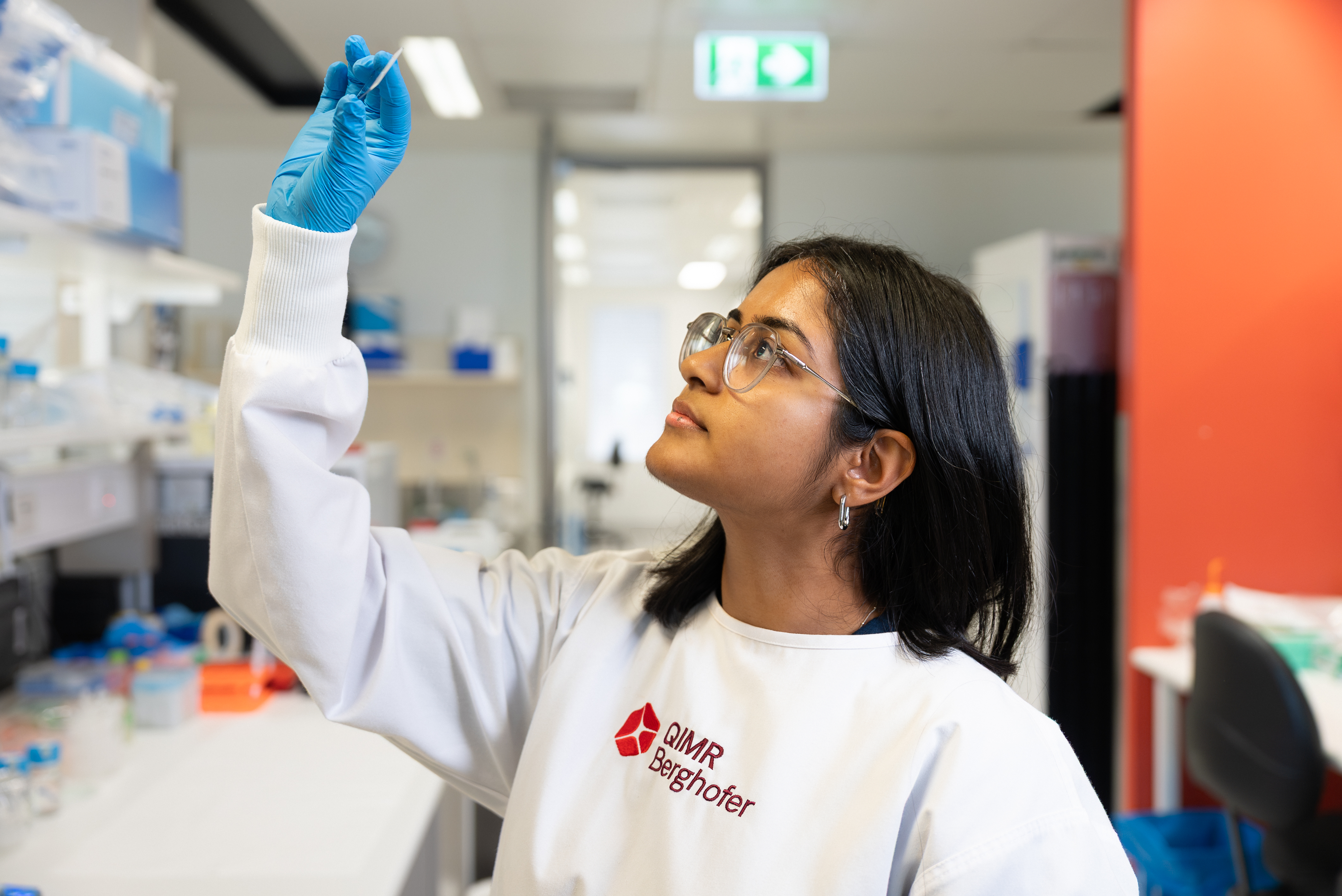
Dr Chandra Choudhury joins Brain Cancer Australia.
When the COVID-19 pandemic hit, scientists around the world shared data, samples and expertise at unprecedented speed — backed by major investment. The result was vaccines developed in record time.
Dr Chandra Choudhury believes the same approach can accelerate progress in brain cancer research.
“When COVID vaccines were developed so quickly, people were questioning why researchers couldn’t do the same for other diseases,” she said. “It was the power of working together. When the entire world is collaborating, you can get somewhere so quickly.”
Chandra has joined Brain Cancer Australia as Project Coordinator for the national Biobanking and Organoid Platform, connecting a network of 20 brain cancer biobanks holding more than 11,000 tumour samples donated by patients.
“Australia is a very big country with not a lot of people,” Chandra said. “Researchers are spread right across every state, so by networking biobanks and standardising how samples are handled, we can work together much more effectively.”
Chandra completed her PhD in Molecular Pharmacology at the University of Queensland in 2022 before joining Dr Lachlan Harris’ team at QIMR Berghofer to help establish the Cancer Neuroscience Laboratory. During that time, she saw first-hand the urgent need for better treatments for brain cancer.
She joined Brain Cancer Australia in January and is based at QIMR Berghofer’s Sid Faithfull Brain Cancer Laboratory, where she is helping build the systems that will support future research.
“We’re custodians of very precious samples,” she said. “Patients are generously consenting to be part of research. Their samples can help answer an infinite number of questions.”
Alongside biobanking, the platform is also advancing the development of patient-derived organoids — three-dimensional tumour models grown directly from a patient’s brain cancer.
Once participating laboratories are aligned in how these samples are developed, researchers will be able to run national studies.
“We can use patient samples to answer questions in near real time and better understand which patients might respond to different drugs, because different tumours carry different genetic mutations,” Chandra said.