

Meet Dr Teesha Downton
For some of Dr Teesha Downton’s patients, getting to brain cancer treatment means getting on a plane.
They fly into Darwin from remote Aboriginal communities across the Top End, usually with a close family member beside them as an escort. It’s a big trip, and for many it’s a long way from home.
“For some patients, English is not their first language. They may not be particularly familiar with the hospital setting, and that can be a little bit daunting,” Teesha says.
“Being away from home and from family and cultural support does impact patient wellbeing.”
Teesha is a medical oncologist at the Alan Walker Cancer Care Centre at Royal Darwin Hospital, and at Darwin Private Hospital. She’s also a member of Brain Cancer Australia’s National Consortium, where she brings the realities of cancer care in the Northern Territory to the national conversation on brain cancer.
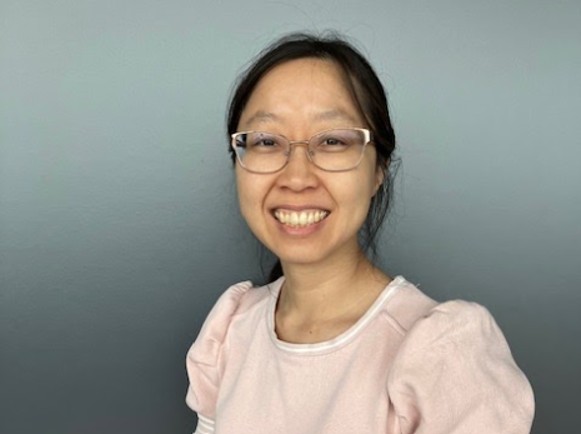
“The medicine up here has a lot of unique aspects to it. It is challenging, but also quite rewarding."
A regional path into medicine
Teesha grew up on the South Coast of New South Wales, and medicine wasn’t her first plan.
“I originally thought I would become a vet, because I loved furry animals. Then I realised a vet looks after a whole range of animals, including snakes, and I didn’t think I could look after snakes.”
She was offered a place in undergraduate medicine after high school, but it meant moving to Sydney, and she turned it down. “At the time, I didn’t feel up to living in Sydney, the Big Smoke. I am not a big city person,” she says.
Instead she completed a science degree at Wollongong, just as its medical school was getting going, then studied medicine there. She completed her first two years as a doctor in Wagga Wagga, expecting to become a rural generalist GP.
But the physician rotations drew her in. She then moved to Darwin for physician training, a place she’d first got to know on a six-week elective placement as a medical student.
“The medicine up here has a lot of unique aspects to it. It is challenging, but also quite rewarding, tackling the health complexities in this population and the tyranny of distance.”
Finding oncology in the Top End
An oncology rotation during her physician training settled it.
Teesha liked how many disciplines oncology brings together.
“We’re all working as one big team, supporting each other and the patient,” she says.
“You do build up a relationship with patients over a long period.”
Darwin is only accredited for a six-month post in medical oncology training, so she completed her training in New South Wales, including time in Sydney and back on the South Coast of New South Wales.
The plan was always to return to Darwin. “I got through living in Sydney, but in the long term it wasn’t for me,” she laughs.
A small team and a big territory
“In Darwin, we currently have four oncologists on the ground,” Teesha says. Between us we need to cover the many different tumour streams.”
As the team has moved towards each oncologist focusing on particular cancers, Teesha chose neuro-oncology alongside breast, gynaecological and genitourinary cancers.
“While it’s not a common cancer, unfortunately brain cancer can have particular impact on one’s independence, cognition and quality of life.”
Clinical trials are harder to reach too. Darwin’s small clinical trials unit currently has no brain cancer trials, so patients have to look interstate.
“Our trials unit is small but it’s mighty,” Teesha says of the unit. “Funding and resourcing are the limiting factors to our ability to take on new trials.”
“We want Northern Territory patients to be counted.”
Making sure the Territory is counted
Teesha became more involved with Brain Cancer Australia when Founder and Director Robyn Leonard OAM and Professor Lindy Jeffree, Chair of the National Consortium Steering Committee, approached her about the Australian Brain Cancer Registry.
“They were keen to involve the Northern Territory, and someone local who knows a bit about the lay of the land.”
The Registry will hold clinical quality data on treatment and outcomes across the entire brain cancer journey from diagnosis to end of life. Brain Cancer Australia is working to include the Northern Territory, so care can be measured against the same best practice benchmarks wherever people live.
“There are an estimated 10 brain cancer diagnoses per year in the Northern Territory, so not huge,” Teesha says. “But we want those patients to be counted.”
Registries require work from clinicians who are already stretched. “It does take time and effort, and unfortunately we’re very time poor. Current clinical work always takes precedence.”
“One of the things Brain Cancer Australia is trying to do with the Registry is to have data collection more automated, to reduce my workload and other clinicians’ workload, and to make the registry a sustainable resource and that we can learn from.”
“If we can identify where deficits are and where we can improve, then we can put in targeted strategies for that. It can also provide evidence for more funding.”
Being part of a national network matters to her too, working outside the major cities.
“Every patient case is a bit different, with particular considerations. It helps, particularly for rare cancers, to have professional connections. I can reach out to a colleague interstate for further advice and opinion.”
It’s her patients that keep Teesha motivated.
“We care about the patients. We want to see good outcomes for them,” she says. “We know that even with our current best treatments, we’re not always able to achieve cure or long-term survival. Research and clinical trials are so important so that more patients can achieve better outcomes.”
What she can always give is compassion, and support for patients and their families as they navigate diagnosis and treatment.

