

When Dr Rebecca Ormsby is processing a brain tumour sample, there’s one moment that always makes her pause.
“It’s when I see the date of birth and notice how young the patient is,” she says.
“My heart sinks because I think about the life they should still have ahead of them. The prognosis for brain cancer is just so devastating."
As the manager of the South Australian Neurological Tumour Bank at Flinders University and a member of Brain Cancer Australia’s National Consortium Steering Committee, Rebecca is focused on improving brain cancer survival rates — and on building the research infrastructure that makes that progress possible
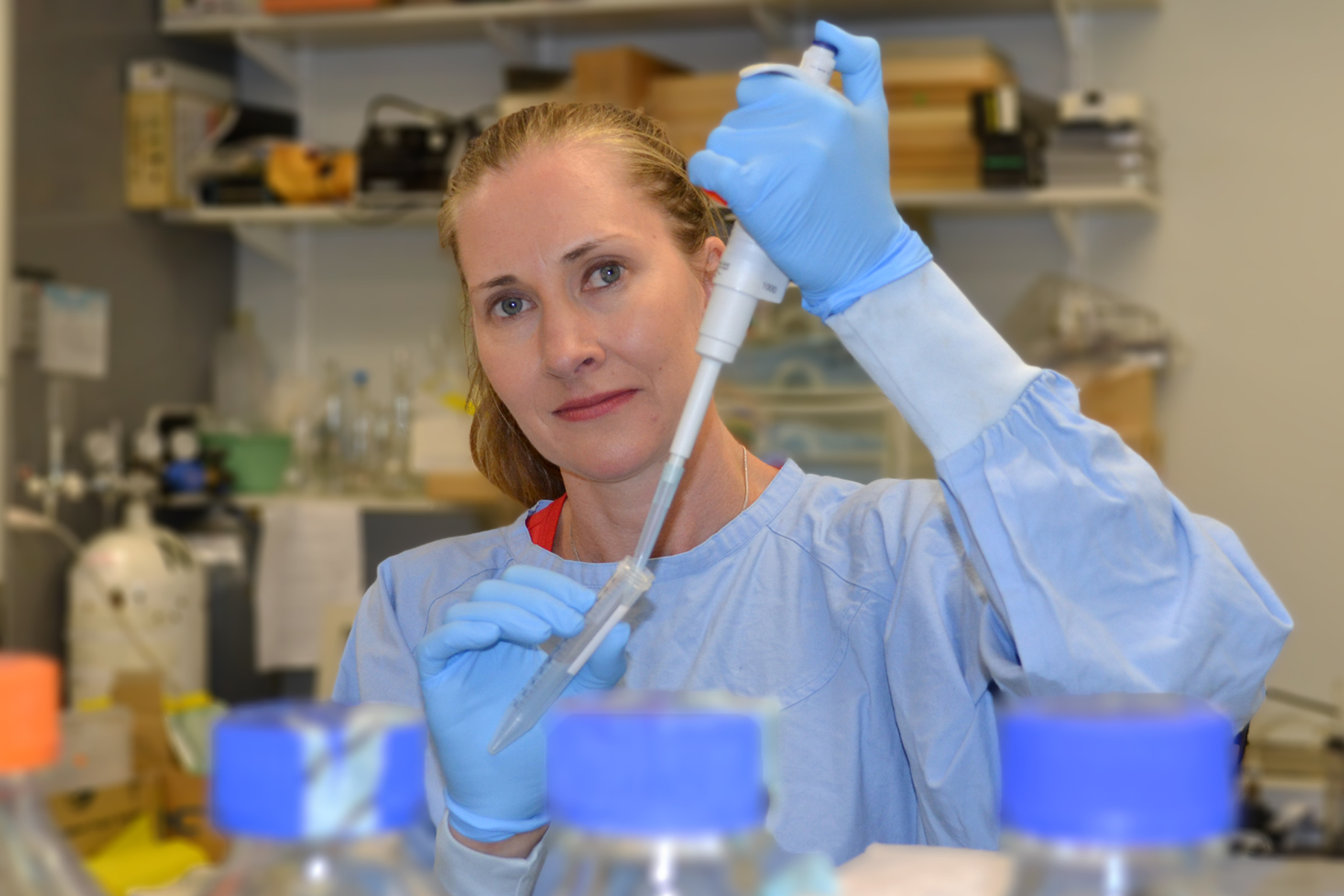
“People like to fund research projects, but without infrastructure like biobanks, those projects can’t happen. Biobanks are absolutely critical. They enable the kind of translational research that leads to new treatments.”
A fascination with things invisible to the human eye
Rebecca knew from the age of 15 that she wanted to be a scientist.
“I loved finding answers to questions that didn’t have answers,” she says. “That discovery aspect – that’s what drew me in.”
What began as a curiosity about zoology evolved into a career in molecular biology and immunology, where Rebecca became fascinated with understanding what’s happening at a level invisible to the human eye.
“I found it amazing to be able to interrogate things at the cellular and protein level.”
But like many research careers, Rebecca’s path hasn’t been straightforward.
From the frustrations of experiments that didn’t work, to the instability of short-term contracts, to a serious accident that left her managing chronic pain while completing her PhD, her journey has required perseverance at every turn.
“You can be trying the same thing for months,” she says. “You have to believe there’s an answer — and keep going until you find it.”
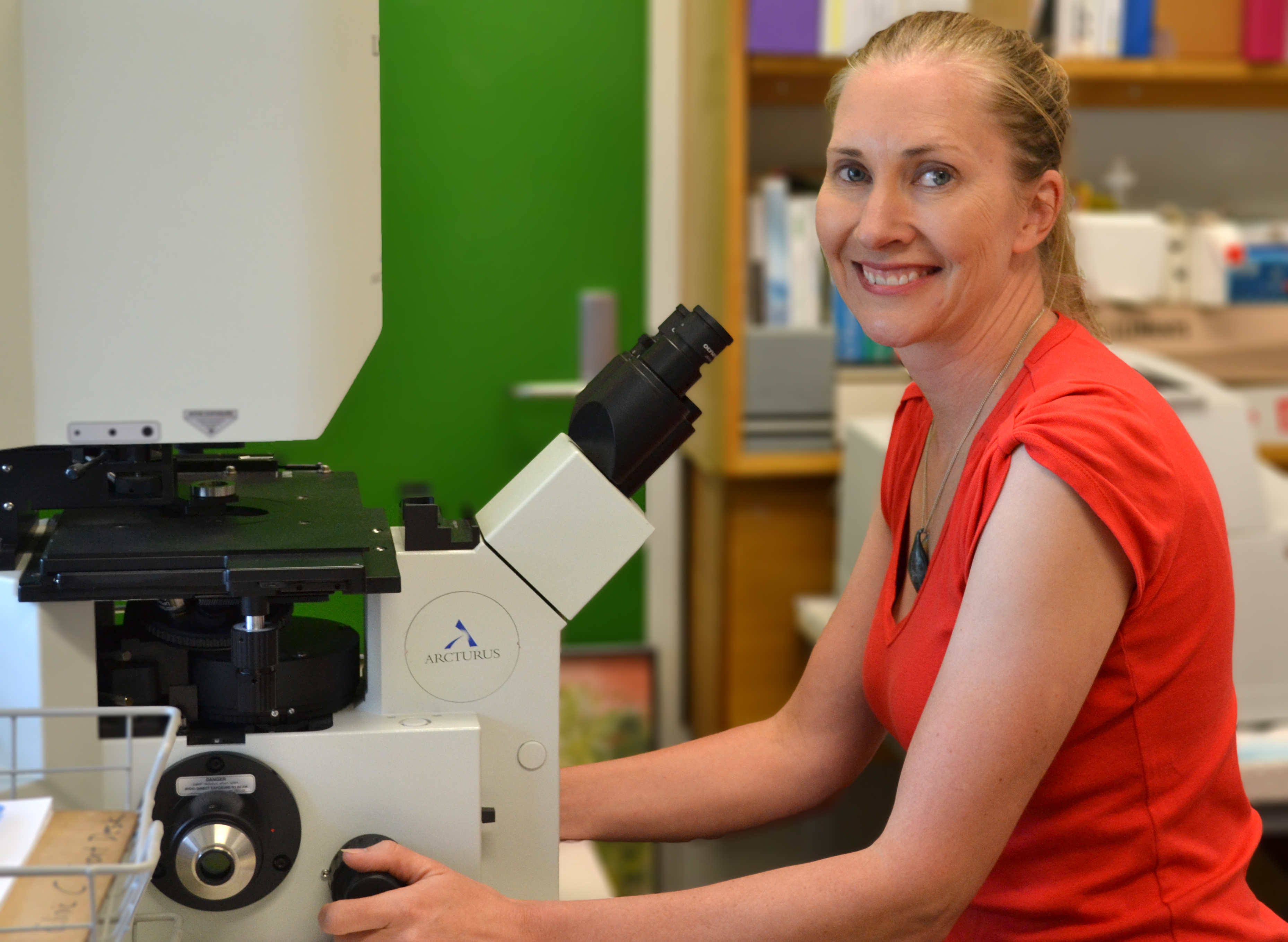
“Instead of individual projects trying to collect their own samples, we’ve created something that can support many projects — more efficiently, and at higher quality.”
The missing link
Today, Rebecca oversees the South Australian Neurological Tumour Bank.
Biobanks like Rebecca’s play a vital role in connecting patients, clinicians and researchers — ensuring that tumour samples are collected, preserved and made available to support research.
“I often describe biobanks as the middlemen,” Rebecca says. “We’re the link between what happens in the clinic and what happens in the lab.”
It’s a complex process that requires close collaboration between the SANTB, neurosurgeons, theatre staff and researchers.
On any given day, Rebecca might be coordinating with neurosurgeons in theatre, working with hospital staff to process samples within minutes of removal, or liaising with researchers to deliver fresh tissue for cutting-edge studies.
“It’s very dynamic,” she says. “You might get a call saying there’s a case happening now, and everything shifts. But that’s also what makes it rewarding — you can see the impact of what you’re doing in real time.”
Since stepping into the role in 2015, Rebecca has built on earlier groundwork to establish and grow the tumour bank into a resource supporting 10 research groups in Adelaide, along with projects across Australia and internationally.
“It’s changed the landscape in brain cancer research,” Rebecca says. “Instead of individual projects trying to collect their own samples, we’ve created something that can support many projects — more efficiently, and at higher quality.”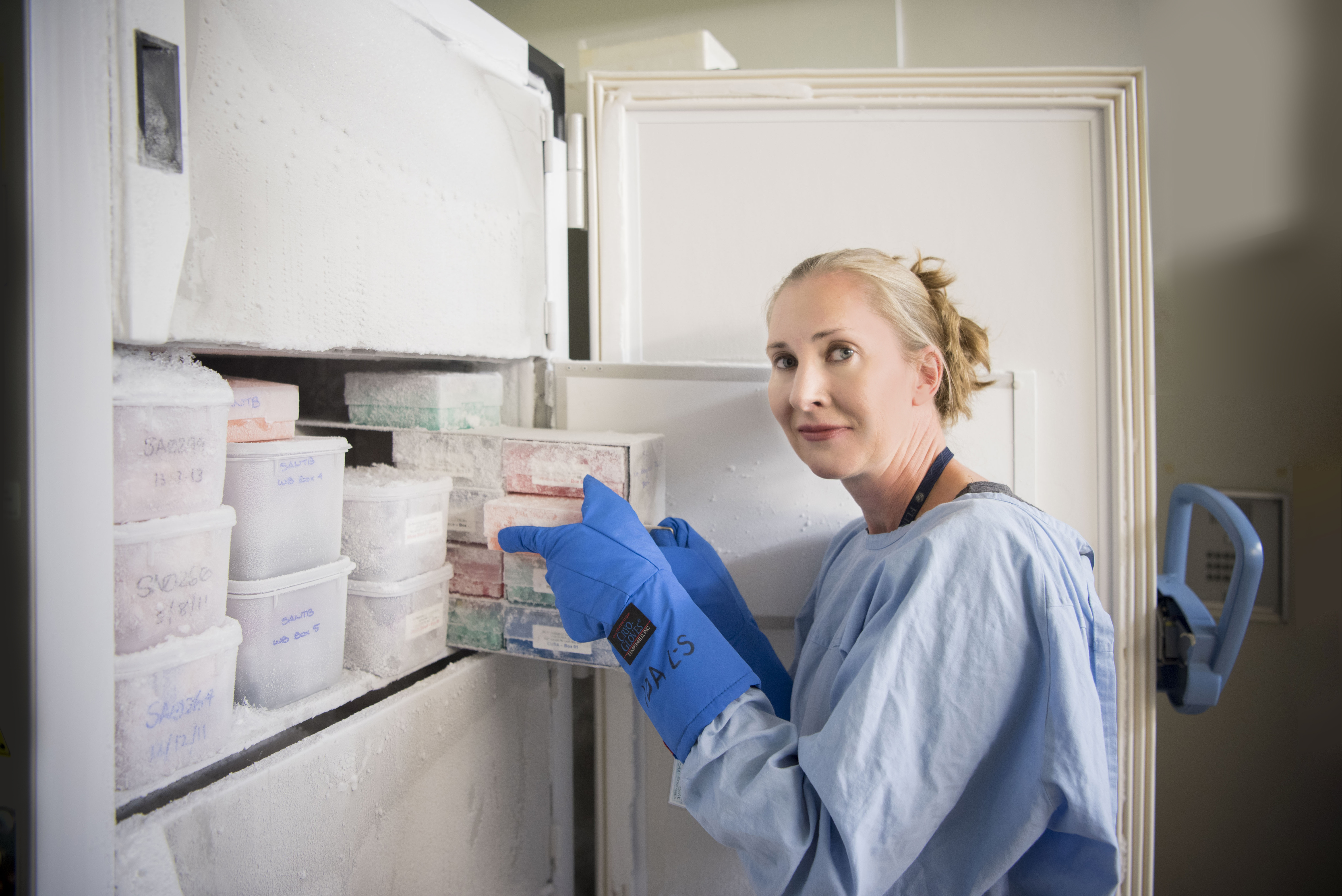
The reality behind the research
Despite their importance, biobanks are often underfunded and under-recognised.
“People like to fund research projects, but without infrastructure like biobanks, those projects can’t happen. Biobanks are absolutely critical. They enable the kind of translational research that leads to new treatments.”
Rebecca is motivated by the many patients that want to contribute to research by donating their tumour samples.
“They want to see research happening in the brain cancer space to give more and better treatment options, and better outcomes. Our job is to make sure that contribution leads to real impact.”
As a member of Brain Cancer Australia’s National Consortium Steering Committee, Rebecca sees collaboration as key to making progress.
“Individually, it can feel like you’re not making much progress. But when you bring everyone together — clinicians, researchers, biobanks, consumer advocates — that’s when you start to see real change.”

