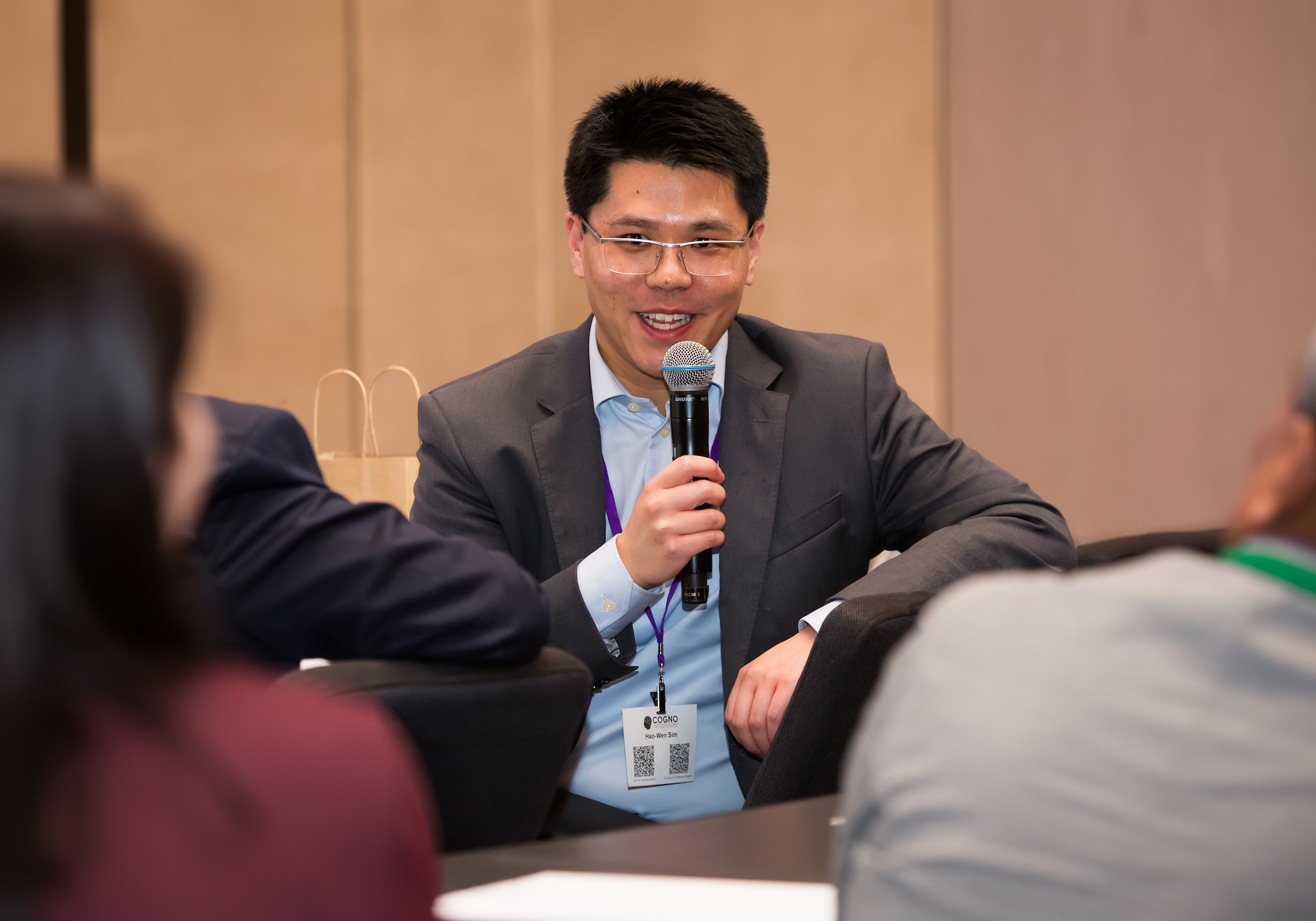
To put Australia at the forefront of brain cancer, Associate Professor Hao-Wen Sim believes we must make the most of every patient experience, every data point and every tissue sample.
Hao-Wen is a Medical Oncologist at Chris O'Brien Lifehouse and The Kinghorn Cancer Centre, a researcher with the University of Sydney's NHMRC Clinical Trials Centre, and a member of Brain Cancer Australia's National Consortium Steering Commitee. He sees firsthand how connected systems can accelerate research and improve outcomes for patients.
"Research becomes much more powerful when information and samples are collected in a consistent way and can be shared across institutions. We're a relatively small country, which means we need to work together. You don't want researchers around the country duplicating work because systems aren't connected."
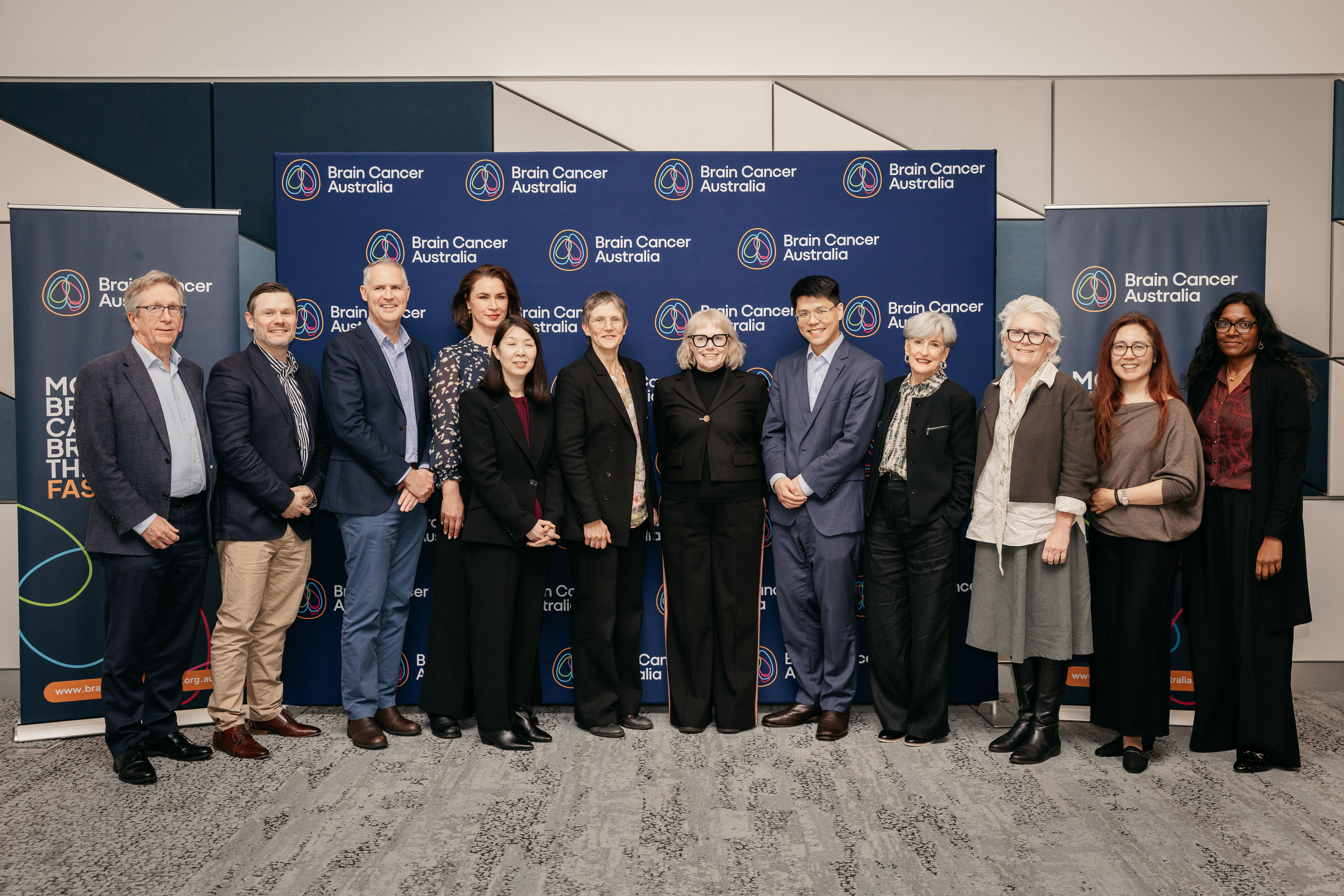
Hao-Wen is one of more than 100 clinicians and researchers who make up Brain Cancer Australia's National Consortium, working collaboratively to create the foundations that enable a coordinated approach to brain cancer research and patient care across Australia.
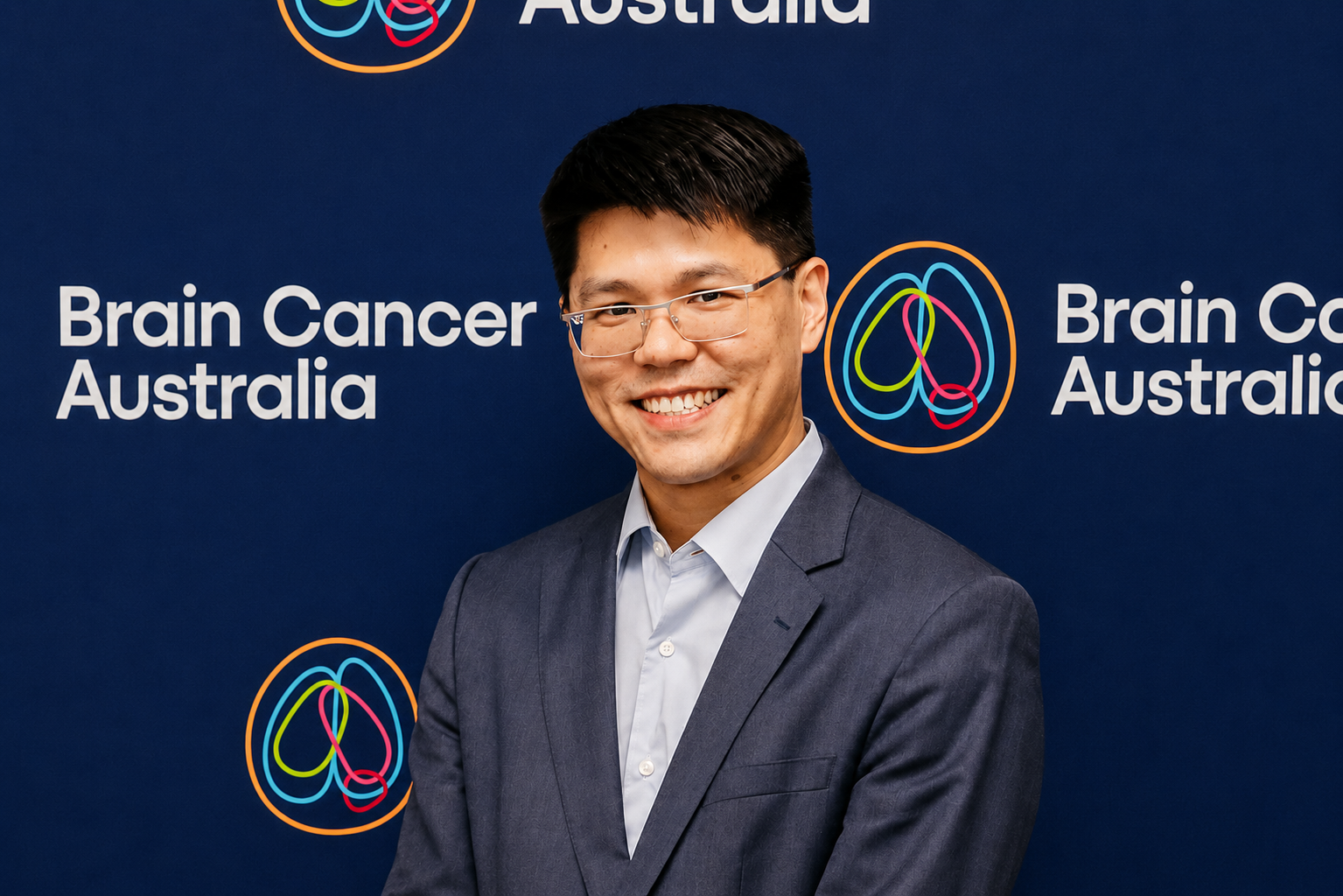
"Research becomes much more powerful when information and samples are collected in a consistent way and can be shared across institutions."
Fascinated by the brain
Hao-Wen's interest in the brain began during medical school at the University of Melbourne.
"The anatomy of the brain is intricate and detailed. It was an uncharted territory that I wanted to explore," he says.
"What fascinated me was how specific parts of the brain correspond to specific functions. You can often see exactly how a lesion in one area relates to the symptoms a patient experiences."
Instead of going straight into clinical practice, Hao-Wen moved to Canada to complete a neuro-oncology fellowship at The Princess Margaret Cancer Centre in Toronto. At the same time, he completed a Master of Biostatistics remotely through the University of Sydney, marrying his love of maths with his work in cancer care and research.
He relished the opportunity to be part of a huge, well-resourced organisation that cared for around half of Canada's cancer patients.
"There was an expert in every possible aspect of cancer and the opportunities for collaboration and pursuing ideas were endless," he says.
He returned to Australia in 2018 to take up his current roles, focusing his clinical practice almost exclusively on patients with primary brain cancers.
"Everyone said that brain cancer was too niche and too rare, but we have enough patients and there is a huge unmet need for better treatment options."
"Brain cancer may be less common than many other cancers, but the burden on patients and families is enormous. Many people are in the prime of their lives – building careers, raising families and contributing to society."
Supporting patients through the toughest moments
For Hao-Wen, caring for patients and advancing research go hand in hand.
"It’s important that I have the front-end patient experience so that I understand what people are going through," he says.
"But being involved in research also allows me to be across in what’s coming next. Research is not going to move fast enough for people facing the most aggressive type of brain cancer, but for patients with lower-grade tumours, it gives them hope knowing that people are working incredibly hard behind the scenes to change what brain cancer treatment looks like in the future."
While neurosurgeons are often the first to deliver a brain cancer diagnosis, Hao-Wen supports patients through later stages of their journey, including recurrence, treatment decisions and transitions to palliative care.
"The hardest conversations often come when the cancer progresses," he says.
"That's when people realise the best available treatment hasn't worked the way they hoped."
Hao-Wen wants people to understand just how profound the impact of brain cancer can be on every aspect of a person's life.
"Even when treatment is considered successful, there can be major effects on cognition, independence, employment and family life," he says.
"Brain cancer may be less common than many other cancers, but the burden on patients and families is enormous. Many people are in the prime of their lives – building careers, raising families and contributing to society."
Building the foundations for progress
Alongside his clinical work, Hao-Wen plays an active role in national and international brain cancer research, helping to design and deliver clinical trials and translational research projects.
As Clinical Lead for the Cooperative Trials Group for Neuro-Oncology (COGNO), he was involved in the design and coordination of several Australian-led brain cancer trials, including VERTU, NUTMEG, MAGMA and LUMOS-2, and is the study chair for the PICCOG substudy, which aims to answer important questions about treatment for primary brain cancers.
Hao-Wen believes Brain Cancer Australia's three national research infrastructure platforms — the Australian Brain Cancer Registry, the Opt Me In clinical trials platform and a coordinated national biobanking network — have the potential to transform both patient care and research.
"The Registry will help ensure brain cancer care is consistent across sites and provide the benchmarking needed to identify gaps and improve outcomes," he says.
"But the real potential lies in research. Registry data can help us design more efficient and robust studies, while the biobanking network will maximise the value of every tissue sample and support trials that can take years to conduct."
"Together, these platforms will create opportunities that don't exist today."
"When I feel exhausted, I just think of the patients that I’m seeing this week. They are far more exhausted than me and are facing challenges far greater than anything I experience day to day. That’s what keeps me motivated."
Looking ahead
Despite the challenges of brain cancer, Hao-Wen remains optimistic about the future.
While progress has been slower than in many other cancers, he believes the field is now building the scientific foundations needed for breakthroughs.
"We understand far more about the biology of brain cancer than we did even a decade ago," he says.
"I would be very surprised if I finished my career doing exactly the same things I'm doing today."
Hao-Wen is buoyed by the dedication of researchers, clinicians and advocates working to drive progress, but when motivation is needed, his mind turns to his patients.
"When I feel exhausted, I just think of the patients that I’m seeing this week. They are far more exhausted than me and are facing challenges far greater than anything I experience day to day. That’s what keeps me motivated."