

When the COVID-19 pandemic hit, scientists across continents shared data, samples and expertise at unprecedented speed – backed by major investment. The result was vaccines developed in record time.
Dr Chandra Choudhury draws a parallel between that global scientific effort and the work she is now coordinating through Brain Cancer Australia’s (BCA) national Biobanking and Organoid Platform.
“When COVID vaccines were developed so quickly, people were questioning why researchers couldn’t do the same for other diseases. It was the power of working together. When the entire world is collaborating, you can get somewhere so quickly.”
That same principle now underpins her work with BCA’s national network of 20 brain cancer biobanks which hold over 11,000 tumour samples donated by patients so researchers can use them for studies – today and well into the future.
“Australia is a very big country with not a lot of people,” she explains. “Researchers are spread right across every state so by networking biobanks and standardising how samples are collected and stored, researchers work together more effectively to accelerate progress.”
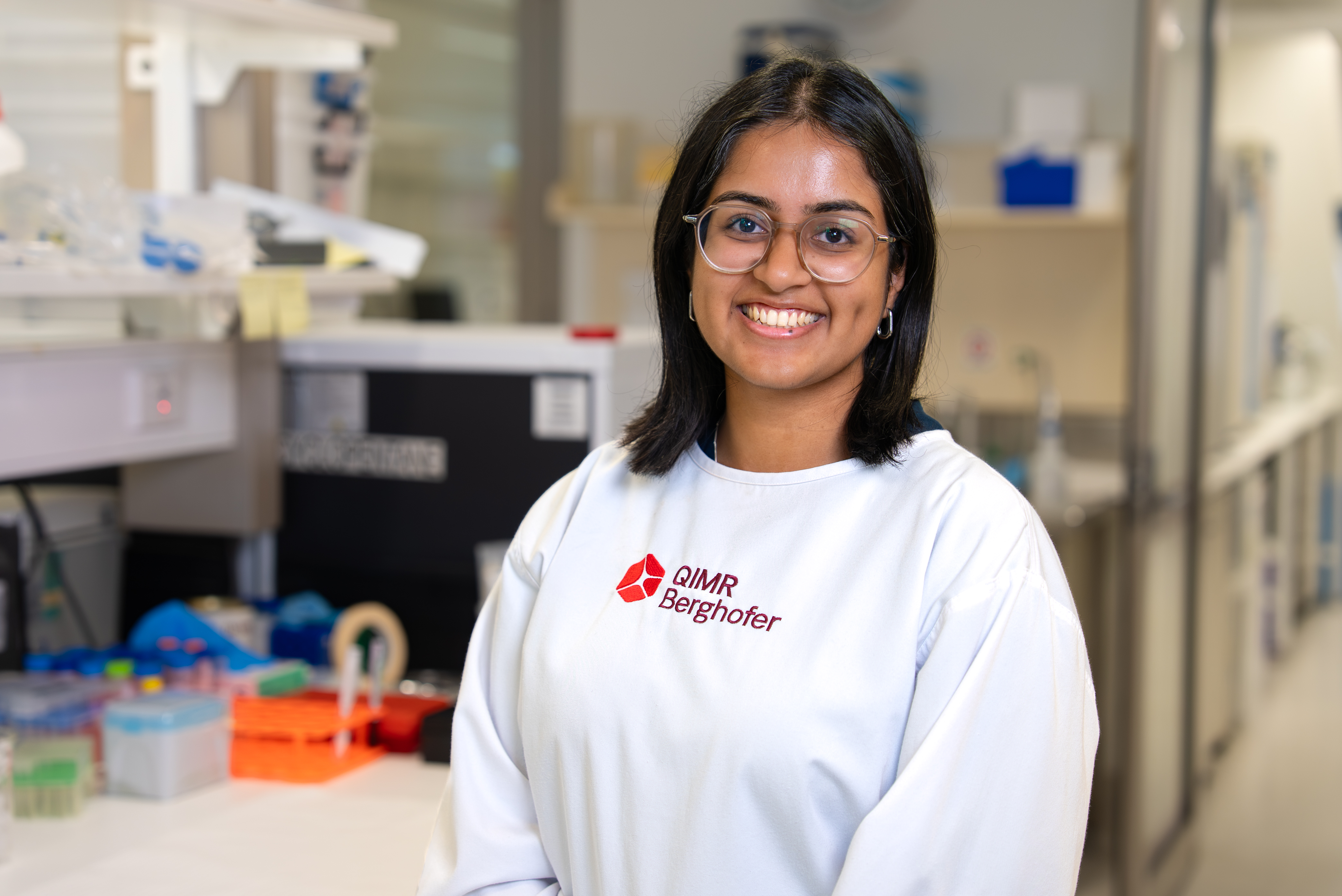
"By networking biobanks and standardising how samples are collected and stored, researchers work together more effectively to accelerate progress.”
The path to brain cancer research
Chandra didn’t originally set out to work in brain cancer research.
“I grew up wanting to be a doctor,” she says. “But when I discovered research, I knew it was the path for me. I loved working with people in the lab while having the autonomy to run my own experiments.”
After completing her PhD in Molecular Pharmacology at the University of Queensland in 2022, she joined Dr Lachlan Harris as a research assistant, helping establish the Cancer Neuroscience Laboratory at QIMR Berghofer.
Chandra was shocked by the unmet needs in the diagnosis and treatment of brain cancer.
“Brain cancer often goes undetected because the early symptoms can be something as simple as a headache or slightly blurred vision,” she says. “It’s terrifying to think that such simple symptoms can have such a devastating disease behind them.”
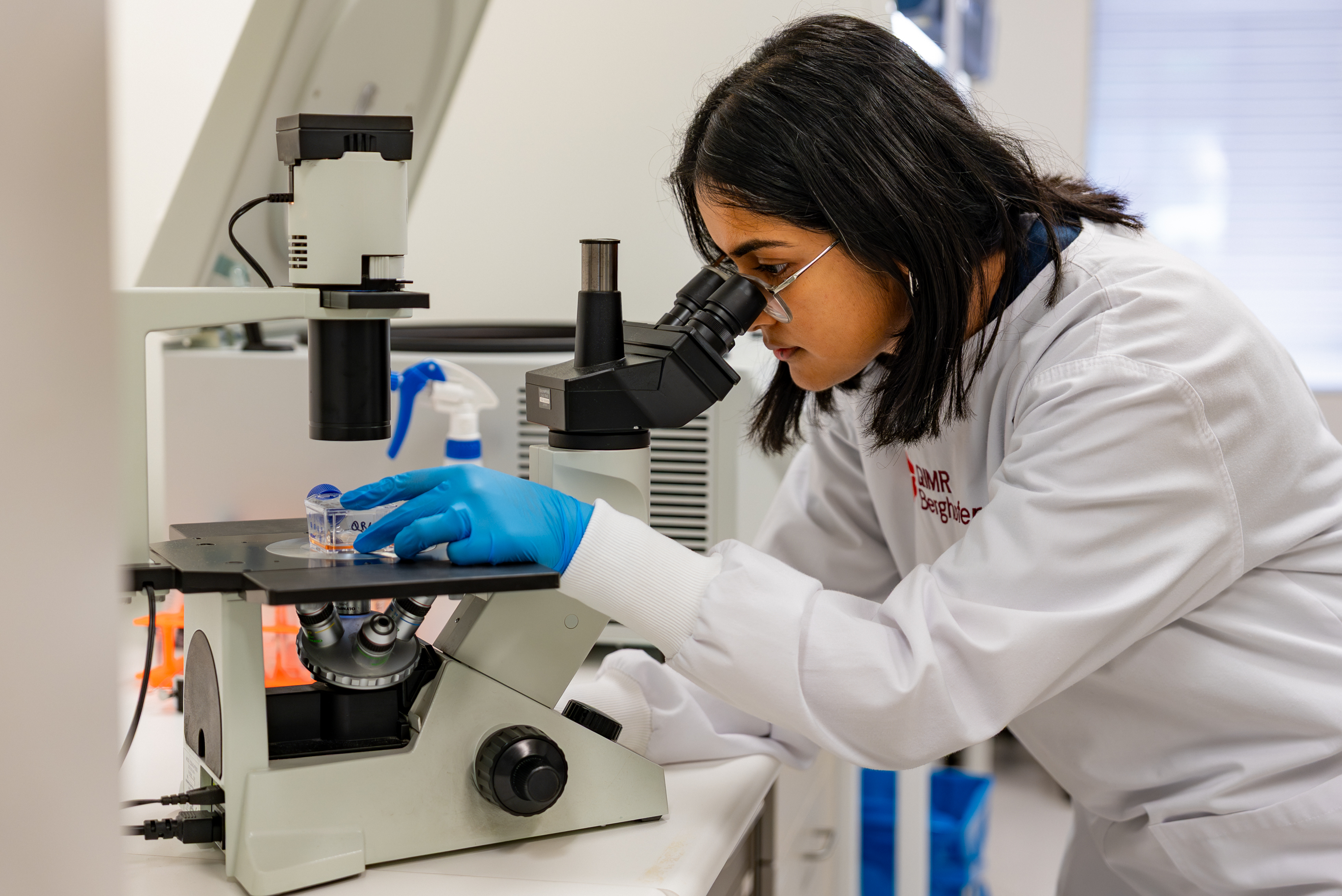
“We’re custodians of very precious samples. It’s vital that we look after them.”
A patient’s precious gift
Chandra joined Brain Cancer Australia in January and works out of QIMR Berghofer’s Sid Faithfull Brain Cancer Laboratory.
She’s passionate about biobanking and doesn’t take the responsibility of her new role lightly.
“We’re custodians of very precious samples,” she says. “Patients are generously consenting to be part of research. Their samples can help answer an infinite number of questions. It’s vital that we look after them.”
Biobanking involves far more than storing tumour tissue. Samples must be processed, catalogued and preserved correctly, with strict ethical requirements governing how they are collected, stored and shared.
“Different labs often face the same challenges, but they’re not always talking to each other,” she says. “Part of my role is helping connect those groups so we can share knowledge and build systems that work nationally.”
Due to low survival rates, many of the brain cancer patients who donate tissue to research won’t be alive to see the benefits of the discoveries their samples make possible.
“It makes it very real. It’s not just a sample; it’s a life that we’re honouring with research.”
Recreating tumours in the lab
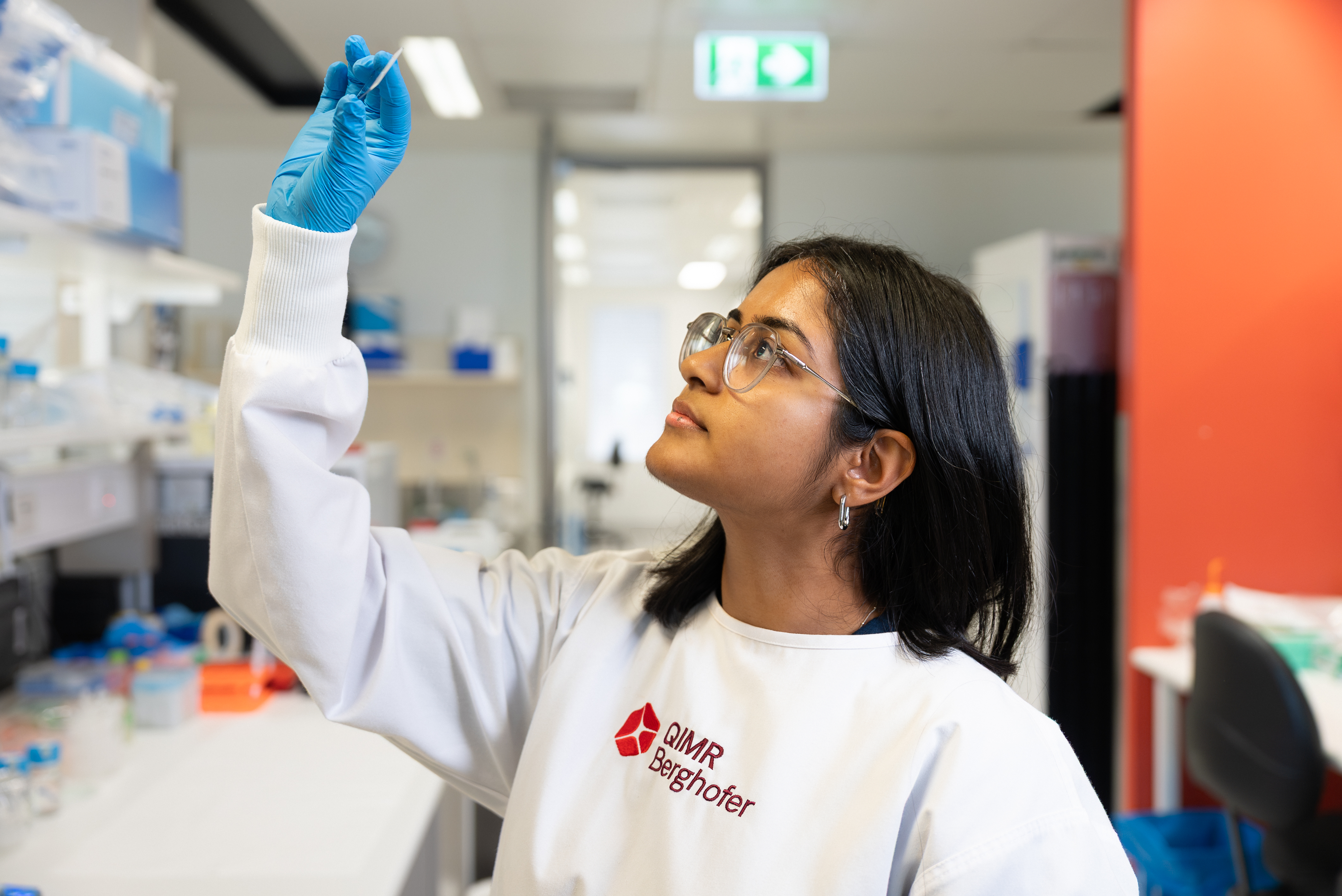
Alongside biobanking, Chandra is also advancing the development of patient-derived organoids — tiny three-dimensional tumour models grown directly from a patient’s brain cancer.
“We use small pieces of tumour to form spheres,” she explains. “They’re called organoids because it’s like an organ but grown in the lab.”
Unlike traditional cells grown flat in a dish, organoids contain multiple interacting cell types.
“They’ll have tumour cells, immune cells, blood cells – all talking to each other,” she says.
This allows scientists to better replicate what happens inside the brain and study how tumours respond to treatments.
“Once participating laboratories are aligned in how they collect and process organoids, researchers across Australia will be able to work together on studies.
“We can use patient samples to answer questions in near real time and better understand which patients might respond to different drugs, because different tumours carry different genetic mutations.”
“The fact that there are so many people who want to help inspires me. Across the sector there is this really big push to get results for brain cancer patients as soon as possible.”
The push for change
The challenge of brain cancer is significant.
“The disease is notoriously difficult to treat. Tumours can contain dormant cells that evade therapy and later restart growth. Even surgery has limits because you can’t remove everything from the brain,” she explains. “Surgeons have to balance removing the tumour with preserving someone’s ability to speak, move, and think.”
Despite the hurdles, Chandra remains hopeful.
What drives her is the community around the work – researchers, donors and families pushing the field forward.
“The fact that there are so many people who want to help inspires me,” she says. “Across the sector there is this really big push to get results for brain cancer patients as soon as possible.”

